
Replying to the general discussion on Budget in Lok Sabha, she said the former Congress chief was creating fake narratives but does not have patience to listen to replies on allegations levelled against the government.
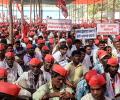
Governments must encourage micro-irrigation, use of natural manure and pesticides in a big way. Farm income can be doubled by reducing cost as much as by increasing MSP, says Sanjeev Nayyar.
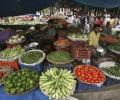
WPI inflation even breached psychological level of 0% in Nov.

Another bill related to the farm sector, the Essential Commodities (Amendment) Bill, was passed on Tuesday.

'This confrontation could have been avoided by a less arrogant administration that initially listened, used whatever negotiating skills they had and tried to be more credible,' observes Ramesh Menon.
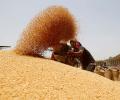
'All imaginary figures are pushed by government bureaucrats.' 'They never showed that the production of wheat was less this time.'

'If India is to emerge as a superpower, we must utilise our huge agricultural potential and not, as in past centuries, merely exploit our farmers,' says Colonel Anil A Athale (retd).

'A perception has been built in our country that whatever Modi says you cannot challenge that.'

The concept of gold as an asset capable of getting anytime money is evaporating.

Significantly, about half of the CEOs who took part in the survey indicated that they propose to increase their investments in near future, 45 per cent cited no change in investment levels, while only 5 per cent expected a fall.
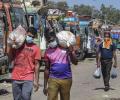
It is likely the government will divide the country into different zones during the proposed extended period of lockdown and might permit a few services to function in safe zones.

'Government is saying that I will not be responsible for ensuring you get MSP but traders and large corporate will be responsible. 'India now is the only country that is saying such things'

Where do the four members of the Supreme Court appointed panel to interface with farmers stand on the Modi government's farm laws?

Against varying claims its SGF ranged from Rs 839 crore (Rs 8.39 billion) to Rs 62 crore (Rs 620 million), between July 29 and August 14, the bourse had Rs 84.66 lakh (Rs 8.46 million) in the actual SGF.

The government has also announced a slew of measures to ease cash flow for the rural sector.
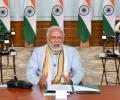
Whether it took the corona crisis to bring about the transformation, or otherwise, the change ought to be welcome, notes Virendra Kapoor.
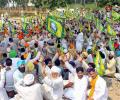
'Why did government not include a provision in the bills which categorically stated that no crop will be sold below the MSP in the open market?'

India is the UK's second-largest market by volumes for Scotch, importing the equivalent of 136 million bottles, worth £146.2 million, in 2021.
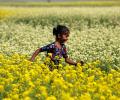
In MP, farmers say sales under new 'Sauda Patrak' method below MSP; Haryana mustard farmers wait for their turn to sell. The annual purchases of major rabi crops in North India largely wheat, mustard and also chana to some extent have been delayed as most cereal mandis were closed in the aftermath of the nationwide coronavirus lockdown.

The prime minister held a meeting with chief ministers via video-conferencing, and said it was imperative to work on war footing, identify hotspots, encircle them and ensure that coronavirus does not spread out.

'Whatever I did, I did for the farmers and whatever I am doing, I am doing for the country'
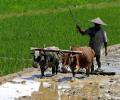
States need to create alternative marketing structures for farm produce since middlemen also provide vital services that are otherwise unavailable to the farmer.

Uttar Pradesh Bharatiya Janata Party's working committee member Ram Iqbal Singh on Thursday said there would have been no agitation by farmers had the Centre consulted them before enacting the new agricultural laws.

Attacking critics, he said a "clique" of people exploited farmers for long as they remained in shackles of rules regulating the sale of their produce and stated that this needed to change, which his government has done.

In the third of a six-part series, Business Standard travels through diamond and textile units in Surat to assess the impact of demonetisation.

Worried about the adverse impact that price rise could cause to Congress' prospects in Lok Sabha polls, Rahul Gandhi unveiled quick fix policy prescriptions for 12 party-ruled states including reform in PDS and giving farmers a wider choice to sell vegetables and fruits.

The development came a day after the protesting farmers rejected the Centre's offer to start talks as soon as they move to Burari and continued to stay put Singhu and Tikri borders of the national capital.

Union leaders, who came out of the meeting venue shouting slogans, said the talks remained deadlocked and some of them threatened to boycott any further meetings if no solution was found at Thursday's meeting.
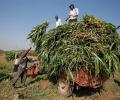
India achieved record foodgrains production this year but the withdrawal of three agri-reform laws and spike in cooking oil prices cast a shadow on the country's resilient agriculture sector that is on course for better harvest in 2022 despite pandemic blues. While soaring production of foodgrains that also helped the government provide free additional rations for COVID-hit poor families for many months together came as a relief, the passing year will be remembered for the long drawn farmers' protest at Delhi borders against the three laws and subsequent repeal of the legislations. The Indian agriculture sector, which was among the few segments that remained robust amid the pandemic gales, is expected to register a growth rate of 3.5 per cent in the current financial year ending March 2022.
'To bring about a paradigm shift in farmers's income, we need to change our approach to agriculture, and transit from the narrow prism of cultivation to a full-fledged enterprise, by building all associated supply chain linkages.' 'This alone will make the farmer an entrepreneur in his own right.'

With almost all opposition parties and several trade unions backing the 'Bharat Bandh' and many announcing parallel protests in support of the farmers, the Centre has issued an advisory directing all the states and Union Territories to tighten security and ensure COVID guidelines are followed.

Let the implementation of reforms be left to the discretion of individual states and ensure an end to the illogical stir, argues Virendra Kapoor.

Younger party leaders are livid with the Murli Manohar Joshi-headed manifesto drafting committee for not taking their suggestions, reports Archis Mohan.

With almost all opposition parties too backing the 'Bharat bandh' and many announcing parallel protests in support of the farmers, the Centre has issued an advisory directing the states and Union Territories to tighten security and ensure peace is maintained.

The remarks of the apex court, which also said there is a 'peculiar lack of comprehension' about constitution of a panel, assumes importance as some of the members of the recently constituted committee to resolve the deadlock between farmers and the centre over the farm laws had earlier reportedly expressed their views on the subject.
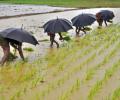
The high-level panel also asked the government to work towards re-orienting subsidies in a targeted manner from the crop sector to the non-crop sector and redesign the electronic National Agriculture Market.
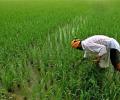
Rajya Sabha took up the discussion on The Farmers' Produce Trade and Commerce (Promotion and Facilitation) Bill, 2020 and The Farmers (Empowerment and Protection) Agreement of Price Assurance and Farm Services Bill that have already been passed by Lok Sabha.
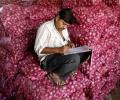
Binu Alex, co-founder and editorial director of www.commodityonline.com, in an interview to Syed Firdaus Ashraf/Rediff.com, says demand-supply imbalance arising out of the government's inability to preserve the crop for non-harvesting season is the root cause behind the price rise.

The new bill will now be introduced in the Lok Sabha for passage in the upcoming Winter session of Parliament beginning November 29.

In a tweet, the prime minister's office said, Modi has approved an ex gratia of Rs. 2 lakh each from the Prime Minister's National Relief Fund for the kin of those who have lost their lives.
